



You’ve likely seen the viral videos of restaurant kitchens that look spotless, or perhaps you’ve walked into a high-traffic lobby and wondered how they keep the marble gleaming despite a rainstorm outside. It isn’t a magic spell or a secret chemical; it’s the logistics of the “dirty water transition.”
Early in my career, I managed a 15,000-square-foot facility where I made the amateur mistake of using standard household cleaning gear. I spent four hours pushing around a gray, lukewarm slurry of filth, only to realize I was essentially “painting” the dirt back onto the floor. I was exhausted, the floors were streaky, and the slip-risk was sky-high.
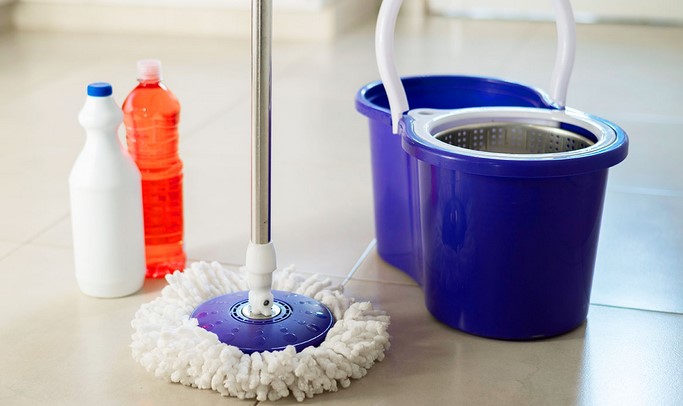
That was the day I retired my kitchen pail and invested in a high-capacity Mop Bucket Commercial. In the world of home improvement and facility management, this isn’t just a bucket—it’s a precision tool designed to manage fluid dynamics and ergonomic health.
The Physics of Clean: Why “Big” Means Better
When you’re cleaning a large area, your biggest enemy isn’t the dirt; it’s saturation. A standard bucket holds about 2 gallons of water. After just 200 square feet, that water is chemically “dead”—it’s saturated with particulates and can no longer hold any more soil.
Think of a Mop Bucket Commercial like a miniature wastewater treatment plant on wheels. These units typically hold 26 to 35 quarts. This high volume creates a “dilution buffer.” Because there is more water, the concentration of dirt remains lower for longer, allowing you to clean larger sections of the facility without a “dump-and-refill” cycle that kills your hourly productivity.
In professional circles, we call this operational scaling. If you can reduce your refill trips from five per hour to one, you’ve just reclaimed 20% of your labor time. Over a year, that’s hundreds of hours saved.
Technical Anatomy of a Professional Mop Bucket Commercial
To the uninitiated, it’s a yellow box with wheels. To an expert, it’s a system of components designed to prevent Cross-Contamination and Repetitive Strain Injury (RSI).
1. The Wringer Mechanism: Pressure vs. Effort
There are two main types of wringers you’ll encounter on a Mop Bucket Commercial:
-
Side-Press Wringers: These use a horizontal handle. They are fantastic for medium-duty tasks and are generally the most affordable.
-
Down-Press Wringers: These are the gold standard. They use a vertical stroke that utilizes your body weight rather than just arm strength. They can extract up to 30% more water than side-press models, leading to faster drying times and safer floors.
2. Sediment Traps and Baffles
High-end commercial buckets often feature “dirty water buckets” or sediment screens. These are small inserts that sit at the bottom. Because dirt is heavier than water, it sinks. These baffles prevent the dirt from being stirred back up when you dip your mop in, ensuring the top layer of water stays “chemically active.”
3. Non-Marking Casters
In my ten years, I’ve seen cheap buckets ruin a $20,000 epoxy floor because the wheels were made of hard, recycled plastic that left black streaks. A true Mop Bucket Commercial uses non-marking thermoplastic rubber (TPR) casters. These glide silently and won’t leave “ghost tracks” on your facility floor.
Operational Logistics: Maximizing Your Cleaning Workflow
If you want to move from “beginner” to “expert,” you need to change how you move the bucket. Most people pull the bucket behind them, which is a recipe for a tripped-over mess.
The “Leading Edge” Strategy
Always push the bucket in front of you or to your side. This keeps the Mop Bucket Commercial within your line of sight and prevents you from accidentally stepping into a freshly mopped (and slippery) area.
Chemical Calibration: The “Glugging” Mistake
I see facility managers “glug” floor cleaner into the bucket without measuring. This is a disaster for operational efficiency. Too much chemical creates a surfactant buildup, making the floor sticky and attracting more dirt.
-
Expert Insight: Use a measuring cup. For a 35-quart bucket, you usually only need 2-4 ounces of concentrated neutral cleaner.
LSI Keywords for the Sanitation Professional
If you’re researching the best setup for your facility, keep an eye out for these technical terms:
-
High-Density Polyethylene (HDPE): The material that makes the bucket resistant to harsh chemicals and cracking.
-
Ergonomic Handle Height: Designed to prevent lower back strain during transport.
-
Quart Capacity: The standard measurement for commercial fluid volume.
-
Floor Safety Compliance: Units that meet OSHA or ANSI standards for slip-and-fall prevention (often indicated by the bright yellow color and “Caution” icons).
Expert Advice: The “Hidden” Warning
Beware of the “Wringer Pivot.” Most people don’t realize that the wringer is the most stressed part of the machine. Over time, the bolts can loosen. If a wringer snaps while you are applying full pressure, the recoil can cause serious wrist or facial injuries.
Tips Pro: Once a month, flip the wringer over and apply a drop of food-grade silicone lubricant to the springs and pivot points. Not only does it make wringing 50% easier, but it also prevents the metal from fatiguing and snapping.
Scannable Checklist: Selecting Your Unit
When purchasing your Mop Bucket Commercial, use this quick-reference guide:
-
Capacity: 35 Quarts (Industry standard for efficiency).
-
Wringer Type: Down-press (Best for ergonomics and drying speed).
-
Drain Plug: Look for models with a bottom drain plug so you don’t have to lift 70 lbs of water to empty it.
-
Caster Size: 3-inch or larger for navigating over door thresholds.
Summary: Elevating Your Facility Standards
Investing in a Mop Bucket Commercial is the first step in moving from “cleaning as a chore” to “cleaning as a system.” By leveraging high-volume fluid dynamics, ergonomic wringing, and non-marking mobility, you reduce the physical toll on your body and significantly increase the hygiene levels of your space.
Whether you are managing a small workshop or a massive commercial garage, your floors are the foundation of your facility’s “brand.” Treat them with the respect that industrial-grade equipment provides.
What’s your current floor-cleaning “bottleneck”? Are you spending too much time refilling water, or are your floors taking too long to dry? Let’s troubleshoot your facility sanitation in the comments below!






+ There are no comments
Add yours