



Imagine this: You’ve spent eight hours perfecting a slow-roasted brisket and a delicate truffle mac-and-cheese for your holiday dinner. Your guests arrive, the wine is flowing, and the first plate is served. But by the time the last person sits down, the brisket is lukewarm, and the mac-and-cheese has transformed into a sad, congealed block of starch.
In the world of high-end home renovation, we call this a “logistical failure of the final mile.” You had the talent and the ingredients, but you lacked the infrastructure to maintain the quality of the output.
After a decade of designing high-performance kitchens, I’ve realized that the most overlooked piece of equipment isn’t the $10,000 range or the smart fridge—it’s the Kitchen Buffet Server. When deployed correctly, this tool transitions your kitchen from a chaotic “cook-and-serve” zone into a streamlined culinary command center.
The Buffet Server as Your Culinary “Holding Pattern”
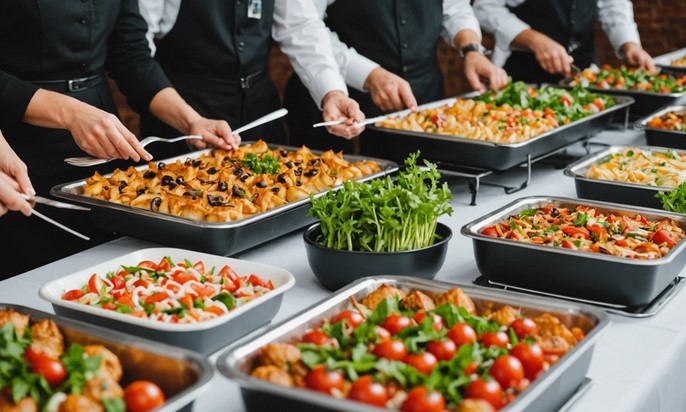
If you think a Kitchen Buffet Server is just a fancy tray for brunch, you’re missing the bigger picture. In professional catering, we look at heat management as a game of physics.
I remember a project for a client who loved hosting 20-person Sunday dinners. They had a massive kitchen but always ended up stressed and sweaty. I realized their problem wasn’t space; it was the “bottleneck” at the stove. By integrating a dedicated warming station, we allowed the cook to finish dishes 30 minutes early, “park” them in the server, and actually enjoy a cocktail with their guests.
Think of your Kitchen Buffet Server as an airport holding pattern for food. Instead of dishes circling the kitchen getting cold or overcooked in a 400°F oven, they glide into a safe, temperature-controlled altitude until you are ready to “land” them on the dining table.
Strategic Selection: Finding the Right Kitchen Buffet Server
Not all servers are created equal. To the untrained eye, they all look like stainless steel boxes, but the technical specs under the hood matter immensely for food safety and texture.
1. Temperature Precision and Thermal Stability
A beginner-grade server often has two settings: “Barely Warm” and “Surface of the Sun.” You want a model with adjustable thermostatic control.
-
The “Safe Zone”: You need a server that consistently maintains a temperature above 140°F (60°C) to prevent bacterial growth, without exceeding 170°F, which begins to dry out delicate proteins.
2. Wet vs. Dry Heat Deployment
This is an insight usually reserved for pro-chefs.
-
Dry Heat: Great for keeping fried appetizers or bread crispy.
-
Wet Heat (Bain-Marie style): Some high-end Kitchen Buffet Servers allow you to add water beneath the pans. This creates a moist environment, which is essential for sauces, mashed potatoes, and stews.
3. Material Conductivity: Why Stainless Steel Wins
In my experience, 304-grade stainless steel is the gold standard. It’s non-reactive (meaning your tomato sauce won’t taste like metal) and offers excellent thermal retention. If you see a server with thin, flimsy lids, walk away—you’ll lose 30% of your heat to evaporation.
Operational Logistics: Where to Place Your Server
The “where” is just as important as the “what.” In home improvement, we focus on the Kitchen Work Triangle, but for entertaining, we need to establish the Service Flow.
The “Landing Zone” Strategy
Place your Kitchen Buffet Server on a sideboard or a kitchen island that is outside the main cooking triangle. This prevents “guest interference.”
-
Pro Tip: Ensure there is a dedicated electrical outlet nearby. A high-wattage server can trip a circuit if it’s sharing a line with a toaster oven or a microwave.
The Multi-Tiered Layout
When setting up your server, think about the weight and density of your food.
-
Heavy Densities (Proteins/Starches): Place these in the center pans where heat distribution is most consistent.
-
Light Densities (Vegetables): These go on the outer edges to prevent them from becoming mushy.
LSI Keywords and Technical Vocabulary for the Savvy Host
To master the use of a Kitchen Buffet Server, you should familiarize yourself with these industry terms:
-
Chafing Fuel: The gel or liquid used for cordless servers (great for outdoor patios).
-
Induction Warming: The high-tech version of buffet service that uses magnetic fields to heat the pan directly.
-
Gastronorm (GN) Sizes: The standard sizing system for pans, making it easy to swap containers between your oven and your server.
-
Cross-Contamination: The risk you mitigate by having dedicated serving utensils for each section of your buffet station.
Expert Advice: The “Hidden” Warning
Here is something the manual won’t tell you: The “Empty Pan” Trap. Never leave an empty stainless steel pan sitting in a turned-on Kitchen Buffet Server. Without food to absorb the thermal energy, the metal can disfigure or scorch the heating element. If you aren’t using one of the bays, fill the pan with an inch of water. It acts as a heat sink and prevents the server from overheating.
Pro Tip: If you are serving something prone to drying out (seafood or pasta), place a damp piece of parchment paper directly on top of the food before closing the lid. This creates a micro-climate that locks in moisture for up to two hours.
Maintenance and Longevity: Protecting Your Investment
A quality Kitchen Buffet Server can last 15 years if you treat it right.
-
Avoid Abrasives: Never use steel wool on the pans. It creates microscopic scratches where bacteria can hide. Use a soft cloth and a specialized stainless steel cleaner.
-
Check the Gaskets: If your server has a lid with a seal, inspect it annually. A brittle gasket is the primary cause of heat loss.
Summary: Elevating the Home Entertaining Experience
Strategic deployment of a Kitchen Buffet Server isn’t about being “fancy”; it’s about culinary operational logistics. It’s the difference between a stressed host serving cold food and a relaxed host delivering a restaurant-quality experience.
By investing in a unit with precise thermal control, placing it strategically to manage guest flow, and using professional techniques like the “moisture-lock,” you turn every meal into an event.
What’s your biggest “hosting nightmare” involving cold food? Have you considered adding a built-in warming drawer or a portable server to your kitchen arsenal? Let’s talk about your kitchen layout in the comments!




+ There are no comments
Add yours