





Rethinking Kitchen Organization in Modern Households
In today’s fast-paced world, managing household operations efficiently has become increasingly important. Families juggle work schedules, school activities, budgeting, and health-conscious meal planning all at once. One innovative yet simple solution that is gaining attention is the Magnetic Menu Board. This tool transforms the kitchen into a structured command center where meal planning, grocery coordination, and daily organization become streamlined. By visually displaying planned meals and related tasks, households can reduce decision fatigue, minimize food waste, and maintain a consistent routine.
The kitchen has always been considered the heart of the home, but in many households it also becomes a point of stress. The daily question of “What should we cook today?” can create unnecessary pressure. Without proper planning, families often resort to last-minute takeout or repetitive meals that lack nutritional balance. Strategic kitchen management introduces a systems-based approach to solving this issue. Instead of relying on memory or scattered notes, a visual planning tool helps households operate more efficiently.
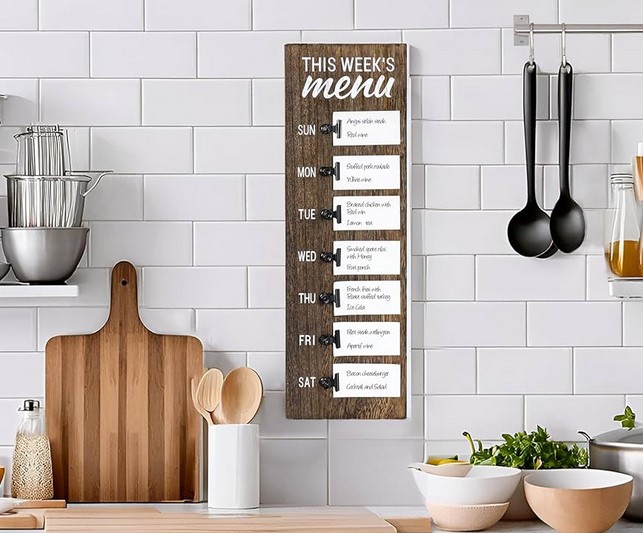
A magnetic menu board functions as a centralized planning surface typically placed on a refrigerator or wall-mounted metal board. Using magnets representing meals, ingredients, or days of the week, family members can easily organize their meal plans. The simplicity of magnets allows quick adjustments without rewriting lists or discarding paper planners. This flexibility is what makes the system particularly effective for busy households.
The Concept of Strategic Kitchen Management
Strategic kitchen management is the practice of applying organizational principles commonly used in business or project management to household cooking routines. Instead of treating meals as daily improvisations, the process becomes structured, planned, and optimized.
Three core principles form the foundation of strategic kitchen management:
1. Visual Planning
Visual tools help individuals process information faster. When meals are displayed visually for the week, everyone in the household can quickly understand the plan. This transparency encourages participation and reduces confusion.
2. Workflow Efficiency
A planned menu enables more efficient grocery shopping and meal preparation. Ingredients can be grouped by recipes, and preparation tasks can be scheduled in advance. For example, vegetables for multiple meals can be pre-cut in one session.
3. Resource Optimization
Planning meals ahead helps households avoid unnecessary purchases and use existing ingredients effectively. This not only reduces food waste but also helps manage the grocery budget more efficiently.
When these principles are implemented consistently, kitchen operations become more predictable and less stressful. Families experience smoother routines, and meal preparation becomes a coordinated process rather than a daily challenge.
Integrating the Menu Board Into Household Routines
The effectiveness of a menu board depends largely on how it is integrated into daily life. Rather than simply displaying meals, it should become part of the household’s weekly planning ritual.
Many families find success by dedicating a short session—often during the weekend—to planning meals for the upcoming week. During this session, family members can contribute ideas, check available ingredients, and adjust the schedule based on activities or time constraints.
For instance, quick meals can be scheduled on busy weekdays, while more elaborate recipes can be reserved for weekends. This strategic alignment ensures that meal preparation matches the household’s energy and availability.
Another benefit of the magnetic system is adaptability. If a planned meal needs to change, the magnets can simply be rearranged. Unlike paper planners, there is no need to erase or rewrite entries, which makes the planning process feel flexible rather than restrictive.
Additionally, involving children in arranging the magnets can turn meal planning into an educational experience. They learn about nutrition, responsibility, and the importance of organization in daily life.
Practical Implementation Strategies
Introducing a menu board system requires more than placing magnets on a refrigerator. To maximize effectiveness, households should consider a structured approach to implementation.
1. Categorize Meal Types
Create magnets or labels for different categories such as breakfast, lunch, dinner, snacks, or special meals. Some households also include color coding for dietary preferences like vegetarian, high-protein, or quick meals.
This categorization simplifies decision-making and ensures a balanced weekly menu.
2. Align With Grocery Planning
One of the strongest advantages of the system is its integration with grocery shopping. Once the weekly meals are arranged, the grocery list becomes much easier to create. Ingredients can be identified immediately and organized by store sections.
This reduces time spent wandering through grocery aisles and lowers the likelihood of impulse purchases.
3. Include Preparation Indicators
Another innovative idea is to add magnets representing preparation tasks such as “prep vegetables,” “marinate meat,” or “cook in advance.” These markers help distribute cooking tasks throughout the week rather than concentrating them all at dinner time.
4. Monitor Household Preferences
Over time, families can track which meals are most popular. If a particular dish is consistently enjoyed, it can become part of a rotating meal cycle. This eliminates the need to constantly invent new menus while still maintaining variety.
5. Use the Board as a Communication Tool
The kitchen often functions as a meeting point for family members. A menu board placed in this central location becomes a natural communication hub. In addition to meals, households can attach notes about grocery needs, cooking responsibilities, or special events.
This transforms the kitchen from a purely functional space into an organized information center.
Long-Term Benefits for Household Efficiency
When used consistently, a menu board system delivers several long-term benefits beyond meal planning.
First, it significantly reduces mental load. Decision fatigue is a real challenge in modern households, and removing the daily need to decide what to cook frees up mental energy for other tasks.
Second, it improves nutritional consistency. Planned meals allow families to intentionally include vegetables, balanced proteins, and varied ingredients rather than relying on convenience foods.
Third, it strengthens family collaboration. Meal planning becomes a shared responsibility rather than falling solely on one individual. This collaborative approach fosters communication and shared ownership of household routines.
Fourth, it supports financial discipline. With clearer planning, grocery purchases become more targeted, reducing waste and unnecessary spending.
Finally, the visual system builds routine and predictability, which can be especially beneficial for children. Knowing what meals to expect during the week creates stability and encourages healthy eating habits.
Efficient household management often depends on small but strategic systems that simplify everyday tasks. Implementing a visual planning tool in the kitchen offers a practical solution for organizing meals, coordinating grocery shopping, and reducing daily decision-making stress. By transforming meal planning into a structured process, families can operate with greater efficiency and collaboration. A thoughtfully designed Magnetic Menu Board serves as both a planning tool and communication hub, helping households maintain order, improve nutrition, and create a more harmonious kitchen environment. When integrated into weekly routines, the Magnetic Menu Board becomes more than a simple organizer—it evolves into a strategic framework for systematic household operations.













+ There are no comments
Add yours