




You’ve probably been there: it’s the dead of winter, your thermostat is cranked to 75°F, and you’re still shivering in your wool socks. You touch the drywall on an exterior wall and it feels like a block of ice. According to the Department of Energy, heating and cooling account for about 50% of the energy use in a typical home. If your walls aren’t performing, you aren’t just losing heat; you are literally watching dollar bills leak through your siding.
In my decade-plus of tearing open walls and crawling through attics, I’ve seen it all. I’ve found newspapers from the 1950s used as “insulation,” and I’ve seen brand-new $1,000,000 builds where the installers were so sloppy that the home felt like a drafty tent. The truth is, the most expensive HVAC system in the world won’t save you if your building envelope is compromised. That is why we need to talk about the workhorse of the industry: Fiberglass Batt Insulation.
The Physics of the Building Envelope
To understand why insulation matters, you have to understand the “Building Envelope.” Think of it as your home’s “skin.” Its job is to separate the conditioned air you pay for from the chaotic weather outside. Heat naturally wants to move from a warm space to a cold space—a process called thermal bridging.
Fiberglass Batt Insulation works by trapping millions of tiny air pockets within its glass fibers. Because still air is a poor conductor of heat, these batts act as a barrier. It’s exactly like wearing a down jacket. The feathers (or glass fibers) don’t create heat; they just stop your body heat from escaping into the winter air.
The R-Value Reality
In the trade, we talk about R-value, which measures a material’s resistance to heat flow. The higher the R-value, the better the thermal performance. However, here is the “pro insight” most homeowners miss: an R-15 batt only performs at R-15 if it is installed perfectly. If you compress that batt to fit behind a pipe, you’ve just crushed those air pockets, and your R-15 is now effectively an R-8.
Why Fiberglass Batt Insulation Remains the Industry Standard
Despite the rise of spray foams and blown-in cellulose, fiberglass batts remain the go-to for most residential interior refurbishments and new builds. Why? It’s all about the balance of logistics and cost-effectiveness.
-
Cost-Efficiency: It is significantly cheaper than closed-cell spray foam, allowing you to allocate budget to other areas like high-performance windows.
-
Acoustic Dampening: Beyond thermal performance, fiberglass is excellent at absorbing sound. I always recommend putting batts in interior bathroom walls and laundry rooms—not for heat, but for silence.
-
Fire Resistance: Since it is made of spun glass (sand), it is naturally non-combustible.
-
DIY Accessibility: Unlike spray foam, which requires specialized respirators and chemical mixing, batts can be installed by anyone with a utility knife and a bit of patience.
Mastering the Logistics of a Perfect Installation
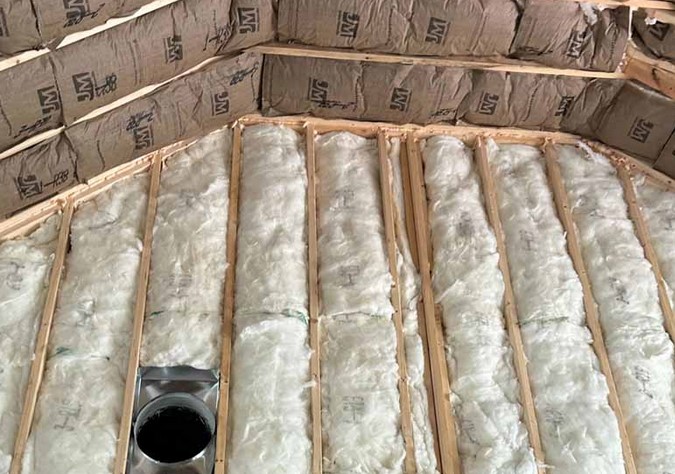
I’ve walked onto job sites where the insulation looked like a series of lumpy pillows stuffed into the walls. That’s a fail. For Fiberglass Batt Insulation to reach its full thermal potential, it needs to be “lofty” and fit snugly against the six sides of the wall cavity.
1. The Friction Fit
A proper batt should be cut about a half-inch wider than the stud bay. This creates a “friction fit” that holds the material in place without needing a thousand staples. If the batt is sagging, you’ve created a gap at the top—and in the world of thermal performance, a gap is a chimney for heat loss.
2. Cutting Around Obstacles
This is where 10 years of experience counts. Most beginners just stuff the insulation behind electrical wires or around outlet boxes. Don’t do this.
Instead, you should “split” the batt thickness-wise. Place half of the fiberglass behind the wire and half in front of it. This ensures the wire is sandwiched in the middle and the insulation remains uncompressed, maintaining its full R-value.
3. Vapor Retarders and Moisture Logistics
Fiberglass itself doesn’t mind water, but it’s a terrible roommate for it. If moisture gets trapped in the wall, it can lead to mold and rot. This is why many batts come with a kraft paper “facing.”
The paper acts as a vapor retarder. In most climates, the paper should face the “warm-in-winter” side of the house. I’ve seen countless DIYers install it backward, which actually traps moisture against the cold exterior sheathing. That’s a recipe for a structural nightmare.
Expert Advice: The “Hidden” Air Sealing Step
If you take only one thing away from this article, let it be this: Insulation is not an air barrier.
Fiberglass is porous. If you have a hole in your wall for a pipe or a wire, the air will blow right through the fiberglass like a screen door. Before I ever lay a single piece of Fiberglass Batt Insulation, I go through the house with a can of expanding spray foam and caulk.
Pro Tip: Seal every “penetration” in the top plates and bottom plates of your walls. If you don’t air-seal first, your fiberglass is just acting as a giant, expensive air filter for the wind blowing through your house.
Thermal Bridging: The Silent Performance Killer
Even with perfect insulation, you have to deal with the studs. Wood is a much better conductor of heat than fiberglass. This means that every 16 inches, you have a “thermal bridge” where heat bypasses the insulation through the wood.
To truly optimize the building envelope, some high-performance builds add a layer of rigid foam board on the outside of the studs. This “continuous insulation” breaks the bridge. While this might be overkill for a simple basement renovation, it’s something to consider if you’re aiming for a “Net Zero” energy home.
Safety and Handling: The Practical Side
Let’s be honest: working with fiberglass is itchy and uncomfortable. It’s made of tiny glass shards, after all.
-
Wear a Mask: Use at least an N95 respirator. You do not want glass microfibers in your lungs.
-
Protect Your Skin: Long sleeves and gloves are mandatory.
-
The “Cold Water” Trick: If you do get itchy, wash your skin with cold water first. Hot water opens your pores and lets the glass fibers sink in deeper. Trust me, I learned this the hard way on a 100-degree attic job in July.
Summary: A Solid Foundation for Comfort
Optimizing your building envelope isn’t about the newest, flashiest gadget. It’s about doing the boring stuff—like installing Fiberglass Batt Insulation—with extreme precision. When you respect the physics of air pockets and thermal bridging, you create a home that is quieter, cheaper to run, and infinitely more comfortable.
Whether you are finishing a basement or building your dream home, don’t let the insulation be an afterthought. It’s the silent protector of your comfort.
Are you planning an insulation upgrade soon, or have you discovered some “mystery material” inside your old walls? Share your stories or ask your technical questions in the comments below—let’s get your home’s envelope performing at its peak!




+ There are no comments
Add yours