





It happens in a split second. You are carrying a heavy tray of appetizers from your freshly tiled kitchen into the hardwood-floored dining room. Your toe catches on a sharp, uneven ridge where the two floors meet. You stumble, the tray rattles, and you barely manage to save your balance—and your dinner. According to home safety data, trips and falls at minor floor level changes account for a shocking number of preventable household injuries every year. In my 10+ years as a home improvement expert, I have noticed a recurring pattern: homeowners will obsess over picking the perfect Italian porcelain tile or premium white oak planks, but completely ignore the exact spots where those two materials collide. They treat the doorway as an afterthought.
Leaving a raw, exposed edge between different flooring types isn’t just an eyesore; it is a ticking safety hazard and a recipe for structural damage. The secret to bridging this gap beautifully and safely is the humble threshold transition strip. Let’s dive deep into how mastering this small detail can elevate your entire home.
Why Every Subfloor Shift Demands a Threshold Transition Strip
When you walk through a home, your feet subconsciously expect a continuous, predictable plane. When you change from a thick plush carpet to a thin luxury vinyl plank (LVP), that predictability vanishes.
Expert Analogy: Think of your flooring materials like two different countries, each with its own laws, climate, and terrain. A threshold transition strip is the peaceful border customs checkpoint. It safely manages the traffic passing between them, smooths out the sudden change in terrain, and ensures neither side invades or damages the other.
Beyond the obvious aesthetic benefit of hiding ugly, frayed carpet edges or jagged tile cuts, these strips serve three critical engineering functions:
-
Mitigating Trip Hazards: They transform a sharp, vertical drop into a gentle, sloping incline.
-
Accommodating Expansion Gaps: Hardwood and laminate flooring constantly expand and contract with seasonal humidity. Transition strips hide the necessary gaps left at the perimeter to prevent buckling.
-
Protecting Material Integrity: They shield the vulnerable, exposed edges of tile from chipping and stop carpet from unraveling under heavy foot traffic.
Decoding the Types: Choosing the Right Profile for Your Space
Walk into any hardware store, and the sheer volume of transition molding options can make your head spin. To choose the right threshold transition strip, you must first measure the height differential between your two floors.
[Floor A: Tile]  ===\                   /===  [Floor B: Carpet]
                     \--[Reducer Strip]--/
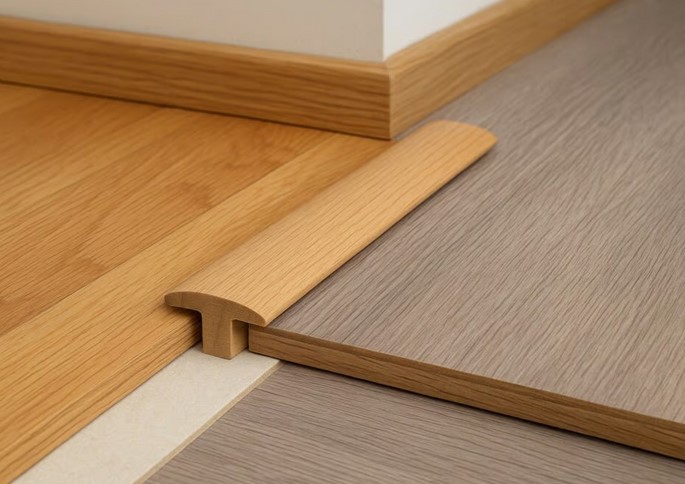
1. The T-Molding (Equal Height Transitions)
This is your go-to profile when your two floor types sit at exactly the same height (e.g., laminate meeting tile of equal thickness). It looks like a capital “T”, where the center leg drops into the expansion gap, and the top arms bridge across both floors.
2. The Reducer (Uneven Height Transitions)
If you are transitioning from a thick hardwood floor down to a thin sheet of vinyl, you need a reducer. It slopes gently downward from the higher surface to meet the lower one, completely eliminating the vertical ledge.
3. The Z-Bar or End Cap
Commonly used where hard flooring meets carpet. The carpet edge is tucked tucked neatly against one side of the strip, while the other side sits flush over the hard surface, creating a tight, clean locking mechanism.
Technical Breakdown: Material Selection and Durability
As someone who has torn out dozens of flimsy, cracked plastic transitions installed by cut-rate contractors, I implore you to invest in quality materials. The strip you choose must withstand thousands of stomps, vacuum cleaner impacts, and stubborn pet claws.
| Material Type | Structural Integrity | Best Visual Pairing | Longevity |
| Solid Hardwood | Excellent; can be sanded and custom-stained | Solid hardwood, engineered wood, natural stone | High (20+ years if maintained) |
| Anodized Aluminum | Outstanding; scratch-resistant and ultra-thin | Modern tile, polished concrete, industrial LVP | Lifetime durability |
| MDF / Laminate-Wrapped | Moderate; budget-friendly | Matches specific laminate flooring kits | Moderate; vulnerable to water swelling |
For heavy-traffic areas like entryways, kitchens, and bathrooms, I always steer my clients toward solid hardwood or anodized aluminum. Avoid cheap PVC strips unless they are hidden away inside a deep closet.
Step-by-Step Installation: Getting a Flush, Professional Fit
Installing a threshold transition strip is an incredibly satisfying DIY project, but it requires absolute precision. A fraction of an inch off, and the strip will wobble or click every time you step on it.
Tools and Materials Required:
-
Your chosen transition strip
-
Track channel (often included for concrete subfloors)
-
Hacksaw (for metal) or miter saw (for wood)
-
Construction adhesive (polyurethane-based)
-
Drill with a masonry or wood bit
-
Tape measure and blue painter’s tape
Step 1: Measure and Cut Twice
Measure the width of your doorway at the floor level, as jambs can occasionally be warped. Mark the measurement on your strip. If cutting wood, use a fine-tooth miter blade to prevent splintering. For metal, use a hacksaw and sand down any sharp burrs on the edges.
Step 2: Clear the Channel
Ensure the expansion gap between the two floors is entirely free of stray mortar, carpet tacks, or underlayment debris. The subfloor beneath must be completely flat and clean.
Step 3: Secure the Base Track
Most modern transition strips use a hidden metal or plastic track system. Screw or glue this track directly into the subfloor right in the center of the gap. If you have a concrete slab subfloor, you will need to drill pilot holes using a masonry bit and insert plastic anchors before driving your screws.
Step 4: The Adhesive Insurance Policy
Here is an insider secret: even when using a track system, apply a thin bead of high-quality construction adhesive along the underside of the transition strip’s shoulders where they rest on the hard flooring. This completely eliminates any future creaking or rattling sounds when stepped on.
Step 5: Snap and Lock
Position the strip over the track and use a rubber mallet—or a hammer cushioned with a scrap block of wood—to gently tap the strip down into the track until it sits firmly flush against both flooring surfaces. Wipe away any oozing adhesive immediately with a damp cloth.
Pro Tips and Hidden Pitfalls to Avoid
Before you head out to tackle this weekend upgrade, keep these critical professional insights in mind:
-
The Floating Floor Trap: If you are dealing with a floating floor (like laminate or click-lock LVP), never screw or nail the transition strip directly through the flooring material into the subfloor. A floating floor needs to move freely. If you pin it down with a transition strip, it will eventually buckle, warp, or split elsewhere in the room. Always anchor the strip between the floors.
-
Under-Door Alignment: Always position the transition strip so that it sits directly underneath the interior door leaf when the door is closed. If done correctly, when the door is shut, you shouldn’t be able to see the kitchen tile from the carpeted bedroom, or vice versa.
-
Mind the Moisture: When transitioning into a wet area like a bathroom, opt for aluminum or a thoroughly sealed hardwood strip. Unsealed wood or MDF will absorb moisture from damp bath mats, causing the strip to warp and rot within months.
Creating a Harmonious, Safe Home
Optimizing your home hardware isn’t just about massive visual transformations; it is about refining the subtle details that impact your quality of life every single day. A properly installed threshold transition strip flawlessly blends contrasting design aesthetics while quietly protecting your family from unexpected trip hazards.
It is a low-cost, high-reward project that bridges the gap between amateur design and true professional craftsmanship. Take a look around your home this weekend—those raw, unfinished floor joints are just waiting for a professional touch.
What do you think? Are you currently planning a flooring upgrade, or do you have a stubborn, uneven doorway in your house that has been causing stumbles? Let me know in the comments below, and let’s figure out the perfect transition profile for your project!











+ There are no comments
Add yours