



You are standing over an antique oak dining table that took three days to strip, or looking at a newly welded steel handrail covered in micro-burrs and surface oxidation. Grab a sheet of standard sandpaper to smooth it out, and one heavy-handed swipe leaves deep, unsightly gouges across the grain.
I made this exact mistake early in my career while restoring a historic home in Boston. I rushed the delicate process of smoothing out a coat of polyurethane on a mahogany stair railing, using a fine-grit sandpaper that left aggressive swirl marks right through the clear finish.
That costly blunder taught me a lesson I share with every apprentice: when precision, flexibility, and delicate abrasion are required, nothing replaces the versatile steel wool pad.
In my over ten years of hands-on experience in surface restoration, woodworking, and metal fabrication, I have come to view steel wool not just as a cleaning scrap under the sink, but as a precision instrument essential for surface refinement.
The Metallurgy of Abrasion: How Steel Wool Works
To understand why a steel wool pad outperforms rigid abrasives in delicate applications, you have to examine its physical structure under magnification. Sandpaper consists of sharp mineral grains glued to a stiff paper backing, acting like miniature chisels hitting a flat surface.
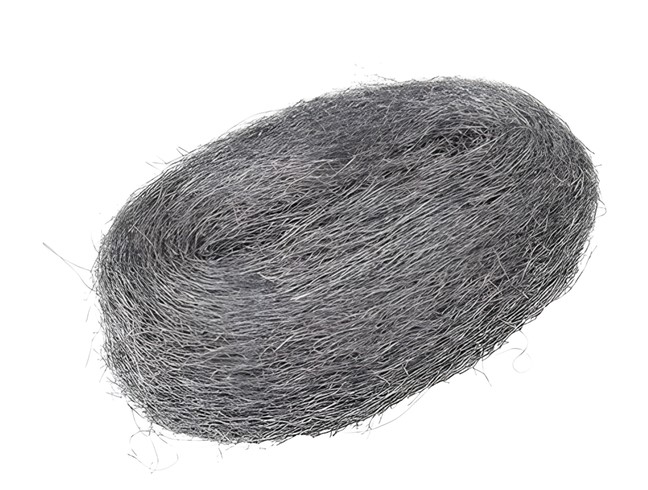
Steel wool, by contrast, is manufactured by pulling low-carbon steel wire through precision serrated dies. This process yields thousands of microscopic, sharp-edged metallic ribbons with a distinct triangular cross-section.
[ Sharp Triangular Wire Ribbon ] ➔ [ Flexes Around Surface Contours ] ➔ [ Shaves High Spots Uniformly ]
                                                                                   │
[ Smooth, Unscratched Substrate ] ◄────── [ Prevents Deep Gouging / Swirls ] ◄─────┘
Think of a steel wool pad like a bundle of micro-planes. Instead of grinding down a surface through high-friction impact, the razor-sharp triangular steel edges gently slice away high spots, dried overspray, and oxidation.
Because the steel strands are woven into a flexible, compressible mesh, the pad conforms seamlessly to intricate wood carvings, turned chair legs, and curved metal pipes where flat sandpaper simply cannot reach.
Decoding the Grade System: Matching the Pad to the Substrate
Choosing the right steel wool pad requires matching the standardized numeric grade to your material’s hardness and the desired level of surface refinement.
Using an overly aggressive grade will ruin a fine lacquer finish, while a pad that is too fine will waste hours removing heavy rust.
| Grade Designation | Relative Coarseness | Ideal Application | Expected Surface Result |
| Grade #0000 | Extra Fine (Micro-abrasive) | Buffing wax, removing finish nibs, polishing glass | Mirror shine, zero scratch pattern |
| Grade #000 | Extra Fine | Scuffing varnish between coats, removing water rings | Satin sheen, minimal tooth |
| Grade #00 | Fine | Cleaning copper pipes, removing paint drips from trim | Light matting, cleans light grime |
| Grade #0 | Medium Fine | Cleaning cast iron, prepping metal for primer | Smooth matte surface |
| Grade #1 to #3 | Medium to Coarse | Stripping paint, heavy rust removal, scrubbing concrete | Aggressive material removal |
Key Applications in Professional Home Improvement
1. Inter-Coat Finishing and Wax Buffing
When applying varnish, polyurethane, or shellac, tiny airborne dust particles settle into the wet finish, creating rough spots known as “nibs.”
Using a #0000 steel wool pad lubricated with paste wax or mineral spirits allows you to knock down these nibs without cutting through the delicate finish layer, leaving a silky satin touch.
2. Metal Oxidation Removal and Glass Restoration
Cast iron cookware, copper fittings, and brass hardware accumulate heavy tarnish over time. A mid-grade steel wool pad cuts through surface oxides without altering the underlying metal dimensions.
When paired with a dedicated glass cleaner, an extra-fine #0000 pad removes stubborn hard water spots and paint overspray from window glass without scratching the pane.
Expert Advice: Pro Tips & Hidden Pitfalls
PRO TIP: Lubricate for Frictionless PrecisionNever use a fine steel wool pad dry on delicate wood finishes or raw metal. Always apply a few drops of mineral spirits, paste wax, or cutting light oil directly to the pad. The lubricant suspends metal filings, reduces frictional heat, and ensures a buttery-smooth polish without loading up the pad.
Hidden Pitfalls to Avoid:
-
Using Standard Steel Wool on Water-Based Finishes or Oak: Conventional steel wool leaves behind microscopic iron fibers embedded in raw wood pores. When exposed to water-based finishes or the natural tannins in oak, cherry, and mahogany, these iron particles rust, causing ugly black tannin stains. Use bronze wool or synthetic non-woven nylon pads for these applications instead.
-
Tearing Pads Apart with Bare Hands: Steel wool fibers possess impressive tensile strength along their length. Attempting to pull a pad apart with your hands will result in deep, painful finger cuts. Always cut steel wool using heavy-duty shop shears or a sharp utility knife.
-
Improper Storage and Fire Hazards: Steel wool has a massive surface-area-to-mass ratio. A single spark from a grinder or contact with a 9-volt battery terminal can ignite a steel wool pad instantly, causing it to smolder intensely. Store your pads in a sealed metal container away from electrical sources and open flames.
Master Your Surface Refinement Workflow
Achieving flawless surface refinement isn’t about applying heavy pressure or using expensive power tools; it is about respecting material science and using the proper abrasive tool for the task.
By integrating the versatile steel wool pad into your woodworking, metal restoration, and finishing routines, you gain unprecedented control over surface texture, gloss levels, and detail cleaning.
What surface restoration projects are you currently working on? Have you ever run into rust issues or finish nibs on your builds? Drop your stories or questions in the comments below—let’s master the art of fine craftsmanship together!








+ There are no comments
Add yours